TBG Tax Journal
Houston Tax Filing Readiness: How to Organize Records for a Tax-Year Closeout
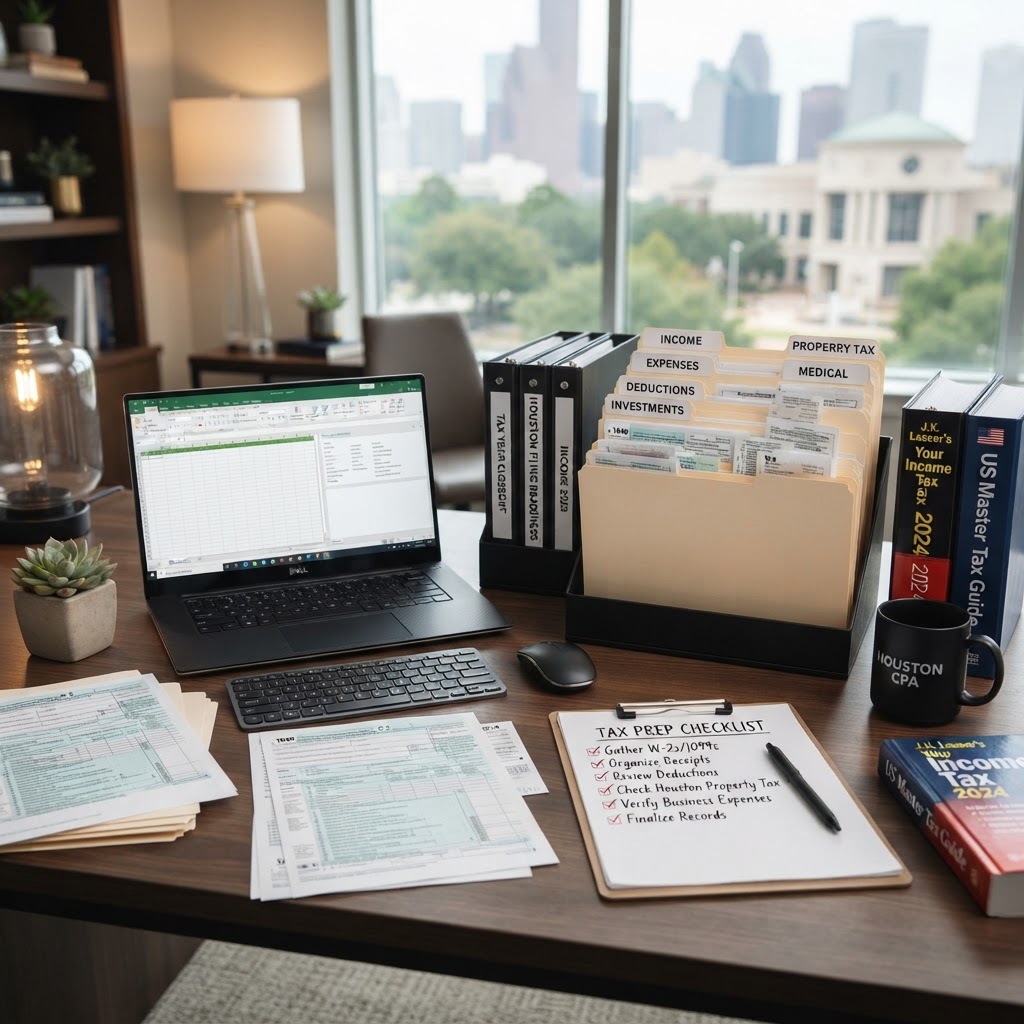
Getting tax records in order before you begin a return can make filing more manageable. For Houston taxpayers, the process is much the same as elsewhere in the United States, but a well-organized set of documents can help you spot missing information and prepare clear answers when you file. This guide focuses on building a tax-year closeout packet: a simple, organized collection of records to use for DIY filing or a tax preparation appointment.
Start with a tax-year folder and a record list
Create one secure folder for the tax year, either digitally or on paper. Inside it, make sections for income, payments, expenses, family and personal changes, and follow-up items. Use a consistent file-naming method, such as “Employer-Form-W2” or “Bank-Interest-Statement,” so you can find a document without opening every file.
Before gathering paperwork, make a short list of the income sources, accounts, and significant events you remember from the year. This list is not a substitute for tax forms; it is a way to check whether your records cover the full year. Include employment, contract or gig work, investments, retirement distributions, rental activity, and any other source that may be relevant to your situation.
If you file on your own, Taxpayer Solutions can help you explore filing options. If you prefer support from a preparer, learn about Houston Tax Preparation and consider how to share your records securely.
Gather records by category
Income
Collect the tax forms and supporting records that relate to each income source. Depending on your circumstances, these might include wage statements, forms reporting nonemployee compensation, interest or investment statements, retirement distribution forms, and records of other income.
Do not assume that one form represents every payment you received. Compare your source list with the forms that arrive, and note anything you expect but have not received. Also keep records that help explain amounts, such as invoices, platform summaries, or payment records. These can be useful for checking that your reported figures reflect the activity for the year.
Tax payments and withholding
Keep records of tax withheld from income and any payments you made during the year. These may include payroll withholding details and confirmations for estimated payments. Record the date, amount, payment method, and confirmation reference when available. If a payment was made through an online account, save a receipt or confirmation rather than relying on memory.
If you find a payment in a bank statement but cannot identify its purpose, place it in a follow-up list instead of guessing. The same applies to a payment for which you cannot locate a confirmation. Organized questions are easier to resolve than unexplained entries scattered across multiple files.
Expenses and activity records
If you have self-employment, gig, rental, or other income-producing activity, keep relevant receipts and records of transactions. Sort documents by type and make a note of what each purchase or payment relates to. A receipt alone may not show the business purpose, so a brief contemporaneous note can help preserve context.
Avoid labeling a cost as deductible simply because it appears in your records. Whether an item belongs on a return depends on the facts and applicable tax rules. Keep the documentation available, then determine its treatment using current tax guidance or qualified preparation support.
Family, address, and account details
Write down changes that could affect the information on your return, such as a move, a change in household circumstances, or updates to names and contact details. Keep relevant supporting records together, but protect sensitive information. You generally do not need to place every personal document in a tax folder; collect what is relevant and be ready to provide it if requested for preparation.
Reconcile the folder against your year
Once the documents are assembled, use your source list to check for gaps. For each income source, ask: Did I receive a form? If not, do I have another reliable record of the activity? For each payment, ask: Can I identify what it was for and when it was made? For each expense group, ask: Do I have records that show the amount and context?
Keep a separate “needs follow-up” list with three columns: the question, the record or person that may answer it, and the next step. For example, you might note that a statement appears incomplete, a payment confirmation is missing, or a form has a name or address that needs review. This keeps uncertainty visible without encouraging you to fill in a figure from memory.
Do not discard an original tax form because its information appears on another statement. Keep copies of relevant documents together until your return is prepared and you have a clear record-retention plan. When scanning paperwork, check that every page is readable and that the file has been saved in the intended folder.
Protect your information while preparing
Tax records contain sensitive personal and financial details. Use a device and storage location you trust, avoid sending documents through public or unfamiliar channels, and confirm the recipient and upload instructions before sharing files. If you work with a preparer, ask how documents should be submitted and whether they need complete statements or only specific pages.
For online filing, check that names, identifying information, and bank details are entered accurately. Use secure account practices and save a copy of submitted forms and acknowledgments. A clean filing packet can reduce last-minute searching, but it does not replace reviewing the return before submission.
Choose a filing path that fits your needs
Some taxpayers prefer guided DIY filing; others want full-service preparation. The right process depends on factors such as how comfortable you are interpreting forms, how many types of income you have, and whether you can set aside time to review your records. If you want to build your understanding of tax concepts, explore Tax Education or TBG Tax Academy.
Whatever path you choose, share complete and accurate information, identify unresolved questions, and review the finished return before it is filed. A well-organized closeout folder helps you prepare thoughtfully without assuming that every document or expense has the same tax treatment.
A practical closeout checklist
Before you start filing, confirm that you have:
- A list of your income sources and the related forms or supporting records.
- Records of withholding and tax payments, with confirmations where available.
- Organized expense and activity records, with context for items that may need review.
- Notes about relevant changes during the year and any details that need correction.
- A follow-up list for missing, unclear, or inconsistent information.
- A secure copy of the records you plan to use and a clear method for sharing them if needed.
The goal is not to make every tax decision before filing. It is to make the information complete, findable, and ready for careful review. That preparation can help you use DIY filing tools or work with a tax preparer more efficiently.
Keep Learning