TBG Tax Journal
Houston Tax Filing Readiness: How to Organize Records for a Home Sale
A home sale can leave you with more than a closing statement to sort through. The final tax treatment may depend on details such as how the property was used, how long you owned it, and which costs are documented. Gathering records early helps you and your tax preparer review the transaction without relying on memory.
This checklist is for people preparing a federal income tax return after selling a home in or around Houston. It is a record-organizing guide, not a determination of whether a particular sale is taxable or whether an exclusion applies. For help choosing a filing approach, see Houston Tax Preparation or review available Taxpayer Solutions.
Start with the sale and closing documents
Keep the paperwork that shows what happened at the sale, including documents from the title company, closing agent, or other parties involved. Depending on the transaction, useful records may include:
- The closing disclosure or settlement statement
- The signed purchase and sale agreement, including amendments
- Documents showing the final sale price and the date ownership transferred
- Records of selling costs, such as certain commissions, title charges, or legal fees
- Any seller credits, concessions, or adjustments shown in the closing paperwork
- A tax information form received in connection with the sale, if applicable
Do not assume that every charge listed at closing has the same tax treatment. Keep the complete documents and identify amounts clearly rather than trying to decide what counts from a shortened summary. If an amount is unclear, flag it for review.
Gather the records from when you acquired the property
The starting point for reviewing a sale often includes information about how and when you acquired the property. Locate records such as:
- The original purchase closing statement
- The deed or other ownership records
- Purchase contracts and amendments
- Records of amounts paid at acquisition that may be relevant to the property’s tax basis
- Documents showing whether you received the property as a gift, inheritance, divorce transfer, or through another arrangement
If you did not buy the property in a standard purchase, do not try to substitute a guess for missing history. Note how you acquired it and when, then gather any records that explain the transfer. Those facts can affect which documents matter and how the transaction should be reviewed.
Create a separate file for improvements
Homeowners often remember major work but cannot easily establish its date, cost, or scope years later. Put potential improvement records in a separate folder. Examples may include contracts, invoices, permits, and proof of payment for substantial work to the property.
For each project, record:
- What was done and which part of the property it involved
- When the work was completed
- The contractor or supplier, if known
- The total amount paid and how payment was made
- Whether the work was an improvement, repair, or another type of expense, if you know
Keep supporting evidence together. A contractor invoice may show the project description, while a bank or card statement can help document payment. Photographs or permit records can add context, but they do not replace financial records.
Routine upkeep and repairs should not automatically be treated as improvements for tax purposes. Include the records, label them accurately, and let the return review determine which amounts are relevant. Avoid combining years of projects into one unexplained total.
Document how the home was used
The property’s use over time can matter to the tax review. Make a simple timeline showing when you owned the home and how it was used. Note relevant periods when it was:
- Your main home
- A second home or another personal-use property
- Rented to tenants or listed for rent
- Used partly for business or another purpose
- Vacant, under renovation, or occupied by someone else
If the home was rented, gather rental income records, expense records, and prior tax returns that may contain related information. If you used part of the property for business, note the dates and the nature of that use. Do not assume that a property’s label on an old document fully explains how it was actually used.
A timeline can be brief. Its purpose is to give the preparer a clear starting point and identify periods that may need follow-up. Keep any lease agreements, rental statements, or other records that support the dates and use you report.
Note ownership changes and unusual events
Add a separate note if the property was jointly owned, transferred between spouses, inherited, placed into a trust, or affected by a major event. Include the names of owners and approximate dates of changes, then attach relevant records such as deeds, court documents, estate paperwork, or transfer agreements.
Also flag circumstances that might make a straightforward sale review less straightforward. These could include a sale after a move, a period of rental use, a change in ownership, or a transaction involving more than one property. A short factual note is more useful than trying to resolve the tax question before the review begins.
Reconcile your records before filing
Before uploading or delivering documents, compare the amounts and dates across the purchase records, improvement file, sale paperwork, and any tax forms. Look for differences such as:
- Sale proceeds that do not match the final closing documents
- A closing date recorded differently in separate files
- Improvement totals that include estimates rather than documented payments
- Missing pages or unclear descriptions for major charges
- Rental or business-use periods that do not match your timeline
If you find a discrepancy, do not alter an official document to make the numbers agree. Mark the item, write down what you believe is missing or inconsistent, and provide the underlying records. If a tax form appears incorrect, contact the issuer about its process for review or correction and retain your communications.
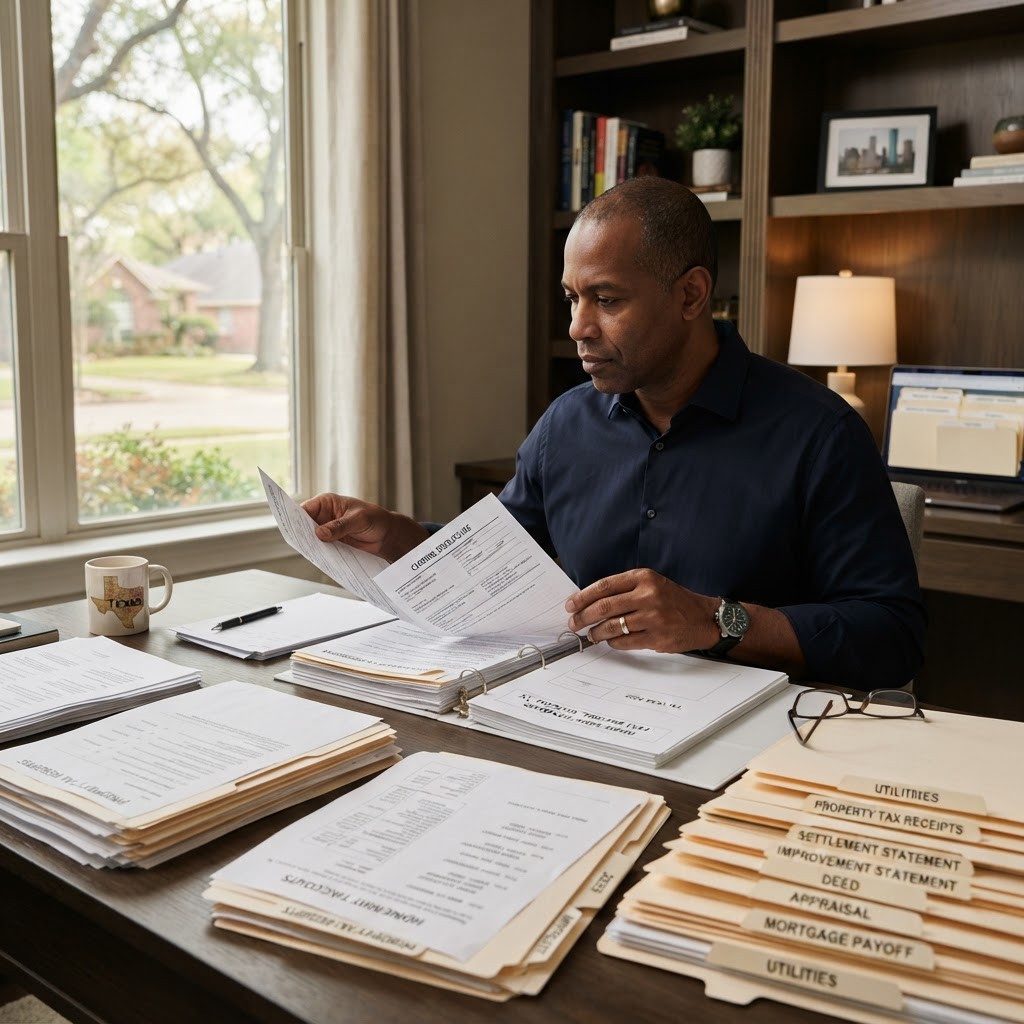
Prepare a compact home-sale packet
A well-organized packet can make a tax appointment or tax software session more efficient. Arrange the material in folders such as:
- Sale: closing documents, contract, and sale-related tax forms.
- Acquisition: original purchase or transfer records.
- Improvements: itemized project records and payment evidence.
- Use of property: your timeline, leases, and records of rental or business use.
- Ownership changes: deeds, transfer documents, or other supporting paperwork.
- Questions: a short list of unclear costs, missing documents, and dates to verify.
Use secure methods to share sensitive tax and identity information. Keep copies of what you provide and avoid sending documents through an unfamiliar or unsecured channel. If you are using guided DIY filing, the same organization can help you answer questions more accurately; if you want a preparer to handle the return, it can help them identify follow-up needs.
For broader taxpayer learning, explore Tax Education and TBG Tax Academy. The right documents and filing approach depend on each taxpayer’s facts, so use your packet to support a careful review rather than to draw a conclusion from one document alone.
This article provides general educational information, not individualized tax advice. Tax treatment depends on the facts of each transaction and applicable law; consult a qualified tax professional about your circumstances.
Keep Learning