TBG Tax Journal
Houston Tax Filing Readiness: A Checklist for Reviewing Business Mileage Records
Why mileage records deserve a separate review
If you drove for work during the tax year, mileage records may be relevant when preparing your federal return. This can apply to some self-employed people, independent contractors, and small business owners in Houston. A calendar entry or a rough estimate at filing time may not provide the same detail as a record created as trips happen.
Mileage treatment depends on the taxpayer’s situation and applicable tax rules. Not every drive connected to work is necessarily deductible, and commuting is generally different from travel for business. This checklist helps you organize information for tax preparation; it does not determine whether a particular trip qualifies.
Gather the records you already have
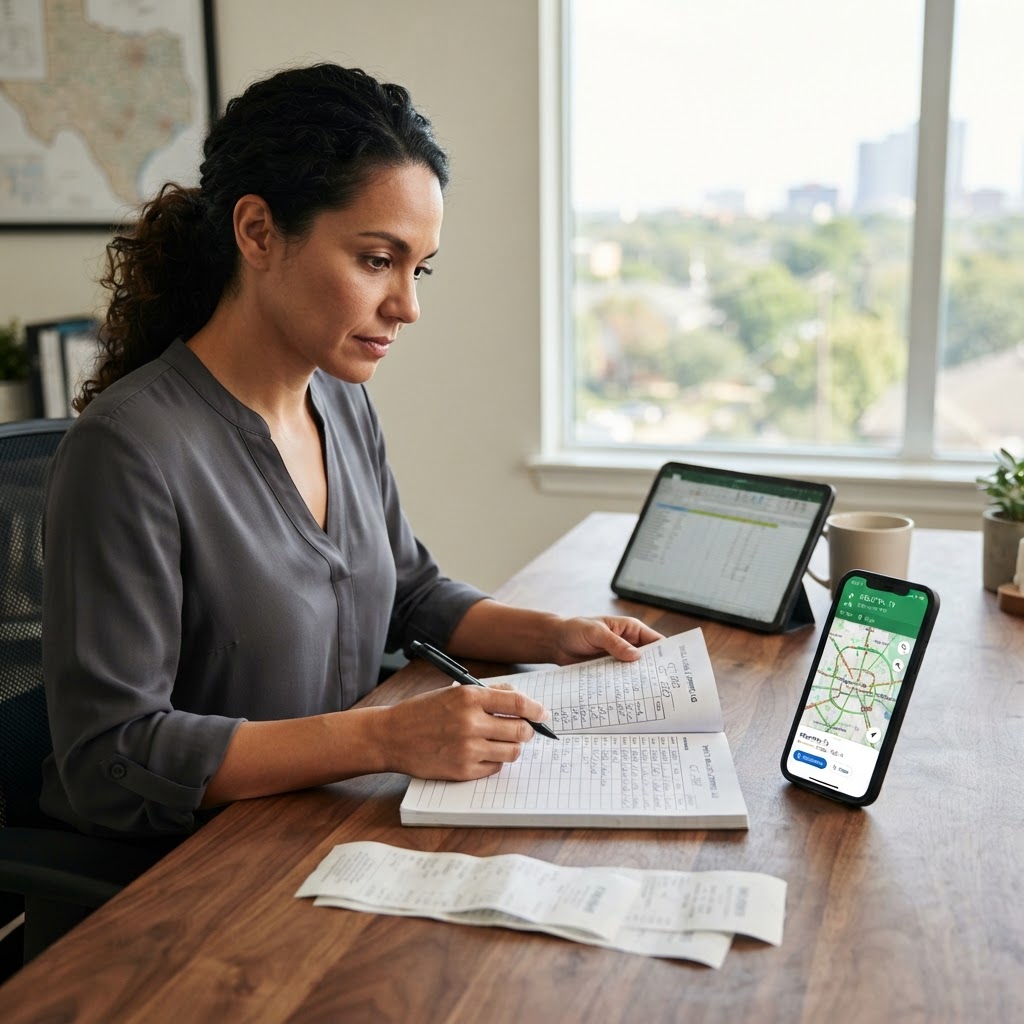
Start by collecting existing mileage logs and related documents. Records may be spread across a phone app, spreadsheet, calendar, vehicle records, or business files. Keep the originals where possible and make a working copy for review.
Look for:
- A mileage log or tracking-app export
- Calendar appointments, dispatch records, or work schedules
- Invoices, client communications, or job records that help explain trip purposes
- Vehicle odometer readings or other records showing the vehicle’s use over time
- Receipts and records for vehicle-related costs, if relevant to your filing situation
- Notes about vehicle availability, ownership, or changes during the year
A supporting document does not automatically establish that a trip qualifies for a tax treatment. Its value is that it can help you recall and explain what happened.
Check each trip for the details that matter
Review your log for whether it identifies the date, destination, distance, and business purpose of each trip. The exact recordkeeping needs can depend on the circumstances and applicable rules, so ask a qualified tax professional if you are unsure what documentation is appropriate for your return.
For each entry, consider:
- Date: Is the trip tied to a specific day?
- Starting point and destination: Can you tell where the drive began and ended?
- Distance: Is the recorded mileage clear, and can you explain how it was determined?
- Purpose: Does the note describe the work activity, such as visiting a customer or traveling between job sites?
- Supporting context: Is there a calendar entry, invoice, work order, or other record that helps make the purpose understandable?
Descriptions such as “work” or “business” may be difficult to interpret later. More specific notes can help—for example, “drove to customer location for scheduled repair” or “traveled between two project sites.” Keep descriptions factual and do not add details you cannot support.
Separate business travel from commuting and personal use
One of the most important review steps is distinguishing business travel from personal driving. A drive to a regular workplace may be treated differently from travel between work locations or travel to meet a customer. Personal errands and family trips should not be mixed into business mileage.
If a trip included both work and personal stops, note the sequence and identify which portions were work-related. Do not label an entire day’s driving as business just because one work task occurred during the day. Likewise, do not assume that every trip from home is a business trip. The facts and applicable rules matter.
Houston-area drivers may travel across a wide service area, encounter changing routes, or make multiple stops in one day. A consistent tracking method can help capture those details without relying on memory months later.
Reconcile the log with other records
Compare the mileage log with calendars, job schedules, invoices, and available vehicle information. The goal is to spot questions, not to force every document to match perfectly. For instance, a client appointment may support the purpose of a trip, while a vehicle record may help you identify an incomplete or unusually large mileage entry.
Flag items that need follow-up:
- Entries with no stated destination or business purpose
- Repeated distances that may reflect a default estimate rather than actual trips
- Trips that do not line up with work dates or known appointments
- Missing sections of the year or long gaps in tracking
- Unusually high or low mileage totals that you cannot explain
- Entries that may include commuting or personal travel
If you find an error, preserve the original information and document any correction clearly. Avoid filling gaps with invented destinations or precise mileage you cannot substantiate. If you need to reconstruct information, explain how you did so and keep the supporting records available for review.
Review vehicle and cost records separately
Mileage documentation and vehicle expenses are related but are not interchangeable. Depending on your situation and the method that applies, a return may call for different information. Organize vehicle-related receipts and records separately from the trip log so a preparer can understand what you have without assuming that every cost or mile is eligible.
Useful records may include fuel, maintenance, insurance, registration, lease, or purchase documents. Whether any of these costs affect your tax return depends on your circumstances and applicable rules. Do not claim the same vehicle use or expense twice under different approaches. If you are uncertain how your records fit together, note the question for your tax preparer rather than guessing.
Make a concise handoff for tax preparation
Before filing, prepare a short summary that states:
- Which vehicle or vehicles were used for work.
- What tracking method you used and whether it covered the full year.
- The mileage totals shown in your records, clearly labeled as recorded figures rather than a tax conclusion.
- Any missing periods, corrections, mixed-purpose trips, or unusual entries.
- Where the supporting logs, calendars, receipts, and work documents are stored.
This summary can make a filing session more efficient whether you use guided Taxpayer Solutions or seek Houston Tax Preparation. If you are preparing your own return, Tax Education can help you build general tax knowledge, while a professional can review questions that depend on your facts.
Set up a better system for the next tax year
Choose a tracking method that is easy to use regularly. Record trips close to the time they happen, use consistent categories, and back up digital logs. Review the records periodically instead of waiting until filing season. If your work changes—for example, you add a vehicle, take on new clients, or begin traveling to different locations—update your process so the records still reflect how you use the vehicle.
A reliable log is not a promise that a particular deduction applies. It is a clearer record of the year that can help you and your preparer evaluate the return using the relevant facts and rules.
This article provides general educational information, not individualized tax advice. Tax treatment depends on your facts and applicable law; consult a qualified tax professional about your situation.
Keep Learning